
Journey of the Collector Tray
Sample Return Capsule with Dust Collector in the exposed position.
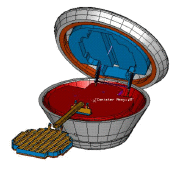
The collector tray, a two-sided, grid-shaped array, was deployed from the Sample Return Capsule (SRC). After exposure, the cell assembly folded up to a compact configuration for stowage into the SRC. The SRC was about a meter in diameter, and is shown here both open and closed.
Sample Return Capsule with Dust Collector in the stowed position.
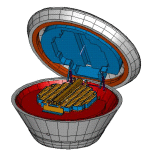
The Sample Return Capsule consisted of the sample tray, the aeroshield/basecover, navigation recovery aids, an event sequencer, and a small parachute system. The Stardust spacecraft was programed to maneuver to the proper flight trajectory and entry angle for Earth return, and then release the SRC to fall back to the surface.
Once the SRC entered the Earth's atmosphere it fell freely through the atmosphere toward the Earth’s surface. At approximately 3 km altitude, the SRC parachute deployment sequence was initiated, and the capsule gently fell to Earth. The landing site was the Utah Test and Training Range.